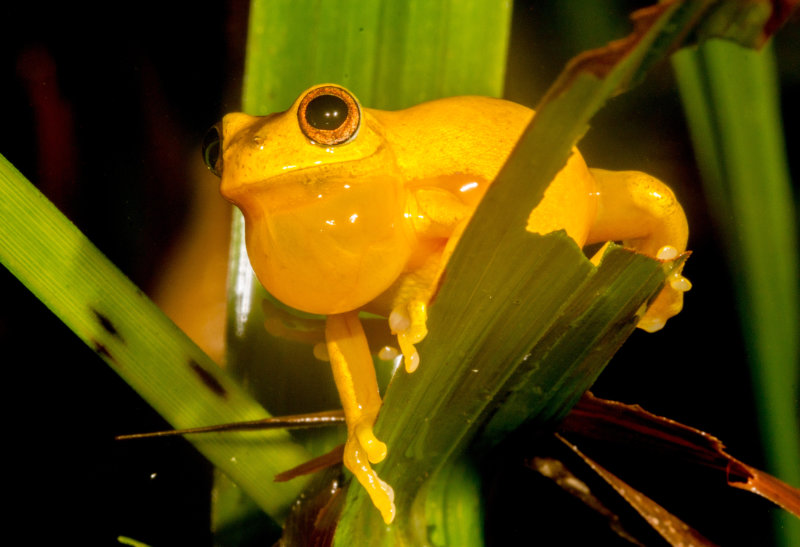
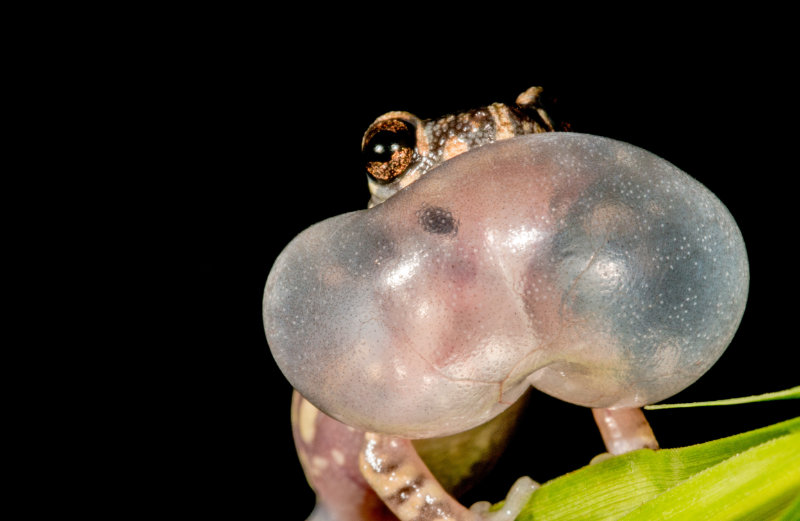
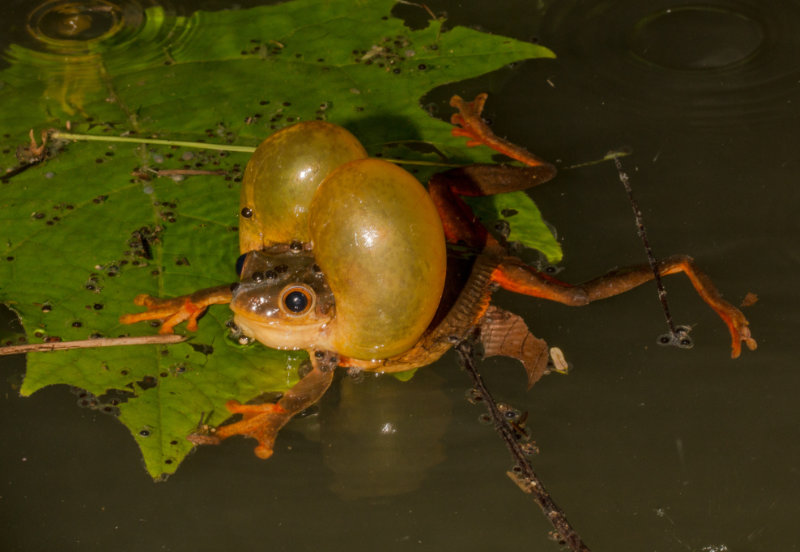
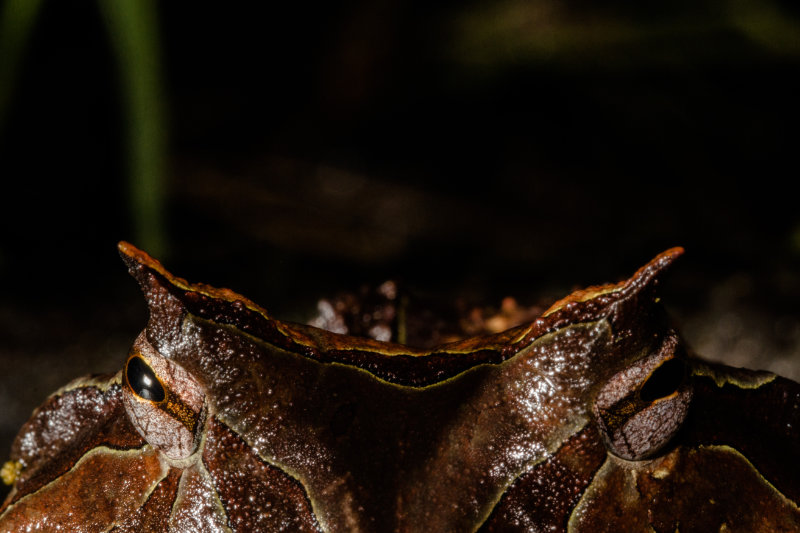
Codex amphibia (an interpretation of the explosive breeding phenemenon) & (phonotaxis)
Guiana - 2016/2018
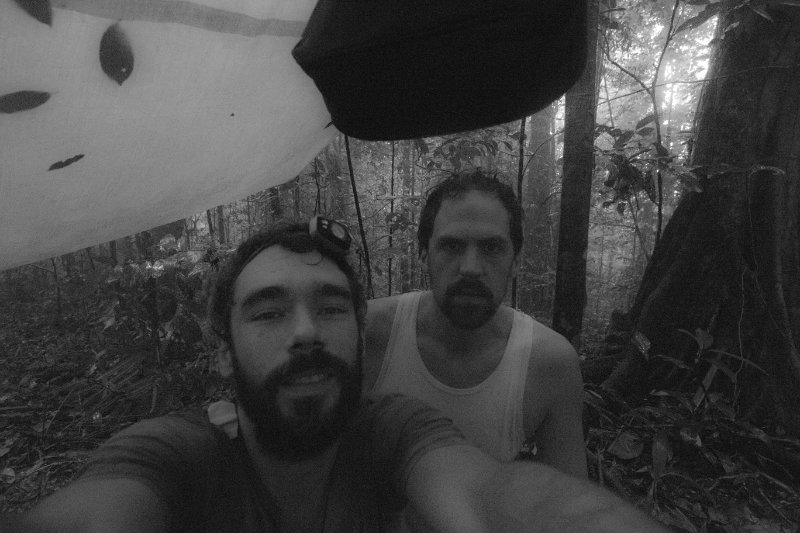
With Antoine Fouquet, herpetologist - CNRS Research Fellow -
===
Phonotaxis (uncountable) Noun: (physiology) The ability to move in an orientation with respect to a source of sound.
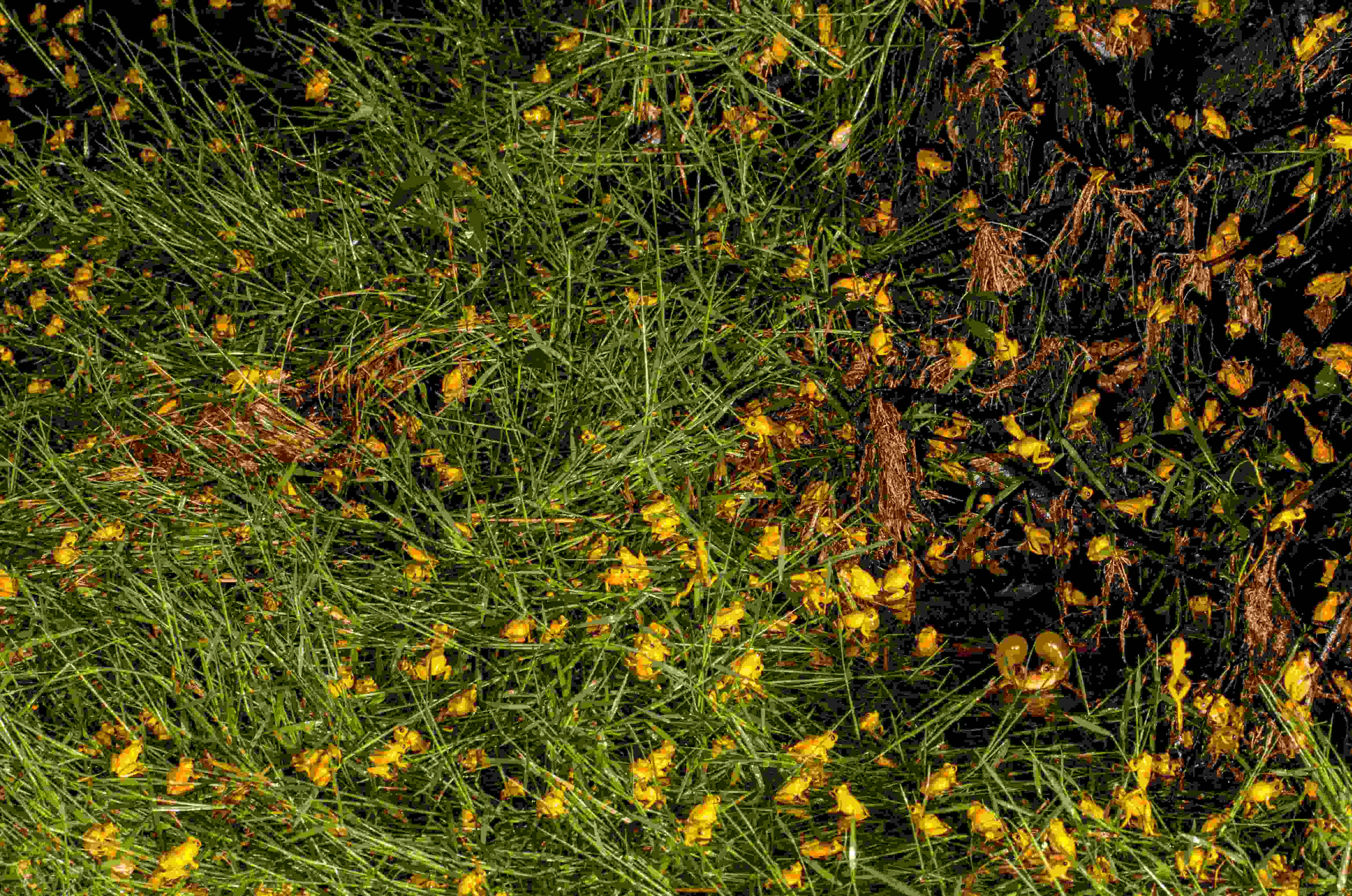
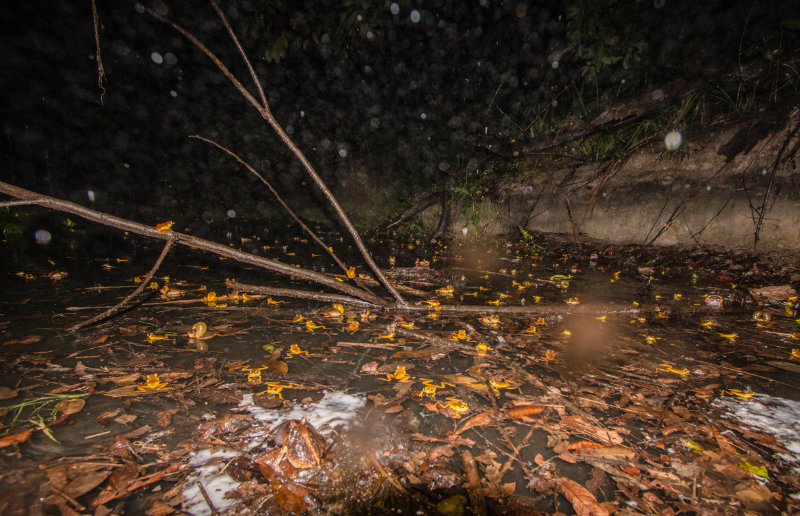
By questioning phonotaxis between species in explosive breeding in the Amazon, i.e. the existence or absence of interspecific relationships, in sound, we necessarily undertake to question how we, humans, perceive an environment. The abrupt change in dynamics induced by the phenomenon is also ours, and we find ourselves physically and mentally included in a process that escapes us. We are disturbed, attracted, fascinated, but we have no real grasp nor control of the moment, of its stakes, of the strategies it deploys. We listen, observe, record, film, without being able to go beyond the stage of interpretation.
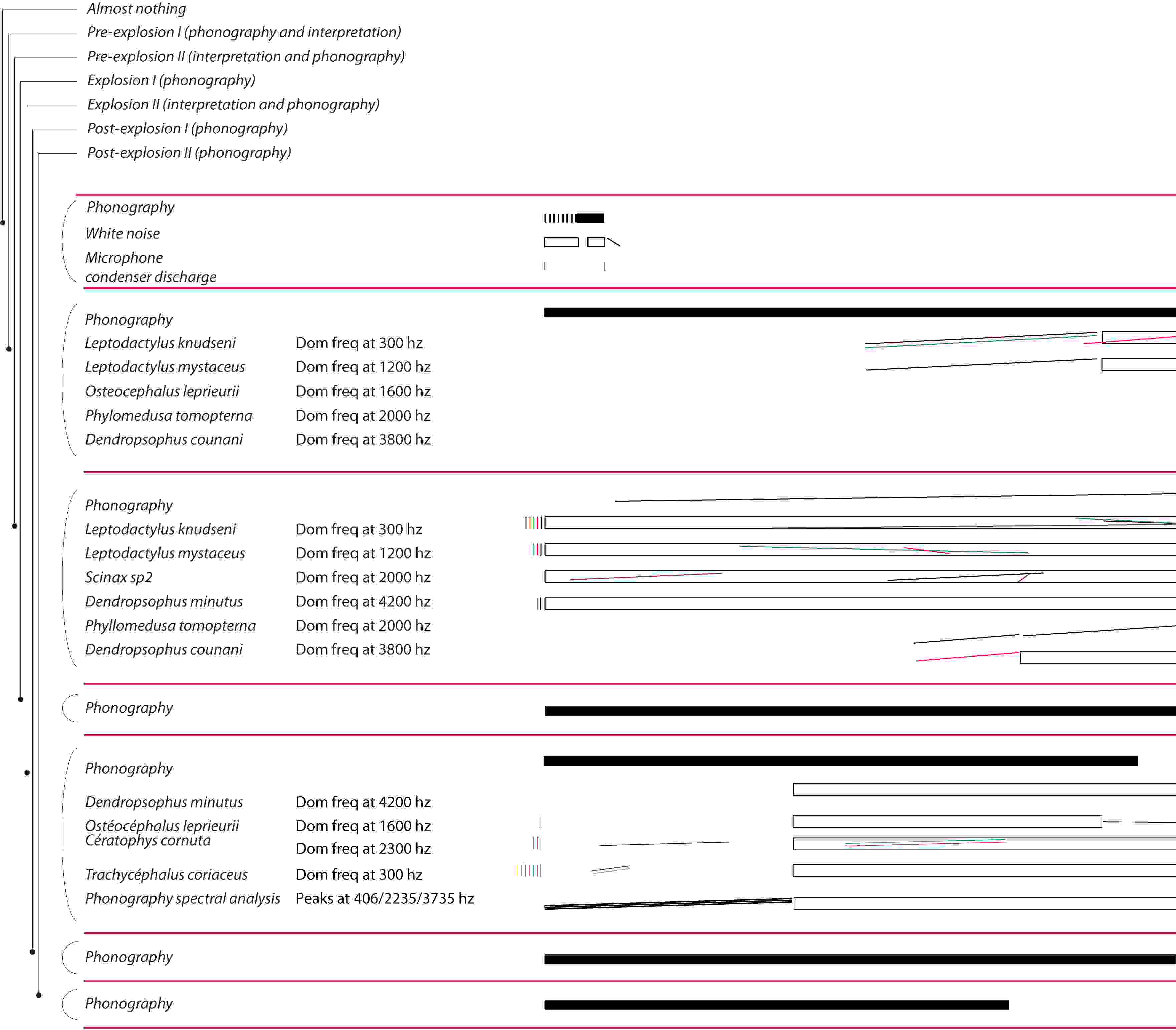
These events unsettle us cognitively but also culturally in that they shatter images linked to a context. They are neither the expression of an equilibrium nor of a supposedly hostile nature. On the contrary, they feature an imbalance, a brutal and sudden disruption of the order of things whose only purpose is the continuity of the living. They are making sense to the animal world just like the irrationality of a concert of noise music or an overflowing crowd does to the human world. It is no longer about sharing but about saturating space, an exaggeration of the spectra of light and sound. This overrunning of dynamics may only make sense in its very short-lived nature; an extreme brevity that transforms localised spaces such as ponds into autonomously functioning areas, distinguishing itself from the forest network to later reintegrate it better by feeding it with new beings. The breeding begins its pre-explosion phase in some heterogeneity with the place. It then asserts this overrunning in the explosion and post-explosion phases, and finally reconnects with the surrounding area. The animals then disperse and the hundred acoustic decibels of the explosion give way once again to a forest whose audible spectrum seems to be precisely distributed.
Explosive breeding events hold their power over this environment, these surroundings, imposing themselves onto bodies and tree trunks; moving away or attracting other species and even able to neutralise some of them (a herpetologist friend of mine told me that after a few hours on an explosive pond the effects of the sound made her vomit). The species taking part in these gatherings seem to prefer the univocity of a saturated sound spectrum than their own phonemes. It is no longer single “voices” that are emitted and received, but their accumulation into a wall of noise. Once again, the interpretation of a datum only opens up questions about what we understand of the situation and the ontological prisms through which we perceive it.
The experience of explosive events induced in me the paradoxical feeling of being an intruder at the right place, the listener/spectator of a ritual intimately resonating with my stubbornness in seeking a confrontation with this kind of environment. The principle of phonotaxis observed in these animals is natural, while my attraction to and towards this noise is cultural. However, we have no more control over the mechanisms that activate animal phonotaxis than we do over those that push us to flee or immerse ourselves in a pool of high frequencies. Fascination with these sounds alone, as well as the only analogy with the musical aesthetics that have led to this, are not (or no longer) enough, in my opinion, to explain the ambiguous relationship we keep with this context. We are unsettled by what is not us but seems to function along similar modalities.
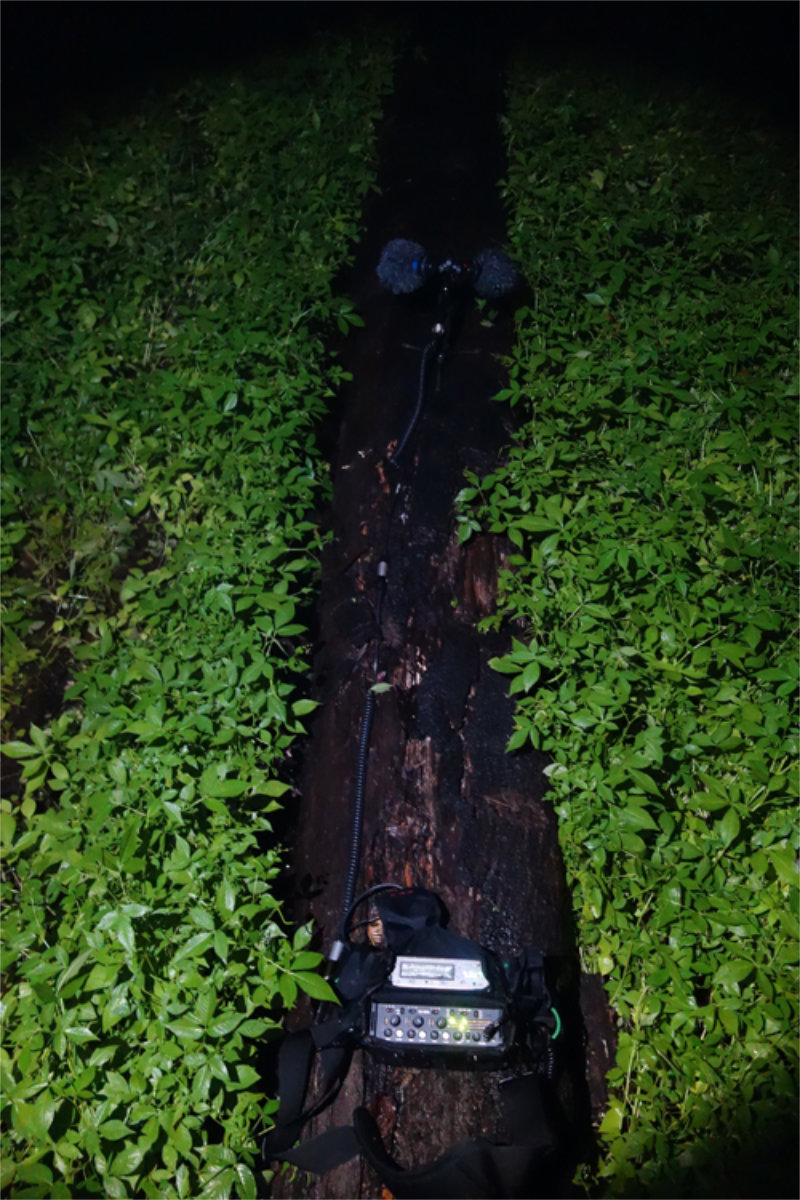
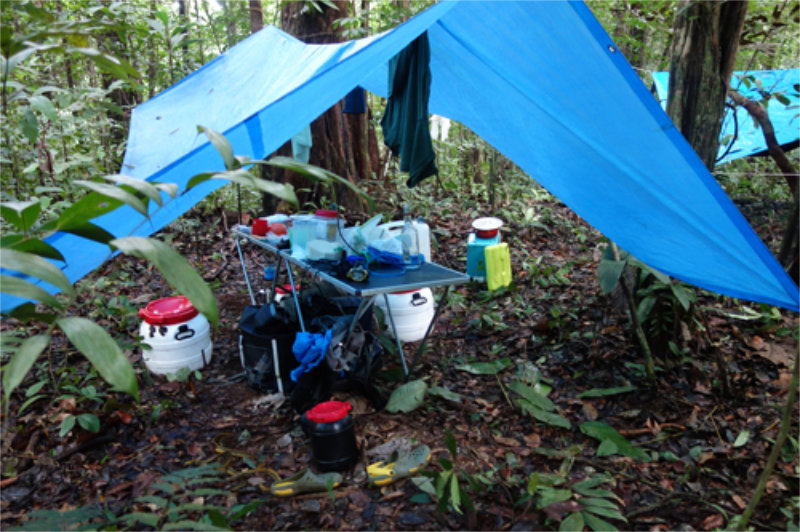
While the first part of this work – Codex Amphibia (an interpretation of the explosive breeding phenomenon – Glistening examples 2018) – raised the question of the interpretation of non-human languages, Codex Amphibia (Phonotaxis) deals with the peak of the explosion as a reference point for an environment. The recordings and compositions resulting from this fieldwork explore the core of the phenomenon and the porosity towards its surroundings, which are made of other dynamics, other timbres of human and non-human origins. These pieces have been produced through our field observations and, in parallel, with a research work conducted by Antoine Fouquet and myself with the help of a team of volunteers, later detailed by Antoine and several collaborators in the article “HETEROSPECIFIC CHORUS ATTRACTION IN TROPICAL FROGS”. Through the meeting of both our scientific and artistic approaches; a hybrid method that pushes our questioning and paradoxes further, we hope to expand the possibilities of a different relationship with this forest.
Codex amphibia on the CEBA (center for the study of biodiversity in Amazonia) website.