Three Degrees of Territorial Analysis
La Pommerie, France - 2014/2015
===
This project stems from the desire to challenge our understanding of a given territory through the use of microphones, and to question the compositional process(es) by means of field recordings. The role of the composer/sound engineer is called into question by the very listening of the audience. I no longer allow my own subjectivity to define the form of the pieces, but instead integrate the local residents of the recording sites into the composing process. This transformation of the sounds by the audience is not necessarily a conscious action, but a disturbance caused by the handling of the medium and defined by listening. The project consists of three stages: work in situ, installation and concert. These three stages represent the three degrees of territorial analysis, its interpretation and re-examination. Over the course of these phases, the material shifts and morphs, culminating in the composition of a piece performed live.
I. Phonography – in situ action
The project's foundation (its first rendition) is a phonographic work carried out on a given territory. During an initial prospecting phase, field recordings are collected while exploring the location. This is followed by a phase during which the recordings are selected and then presented to the public. The fieldwork is systematically documented alongside the recordings. I regard this part as a ‘classic’ way of apprehending the territory, using microphones; an approach that consists of ‘ freezing’ the sound elements of the location in a completely subjective way.
II. Installation
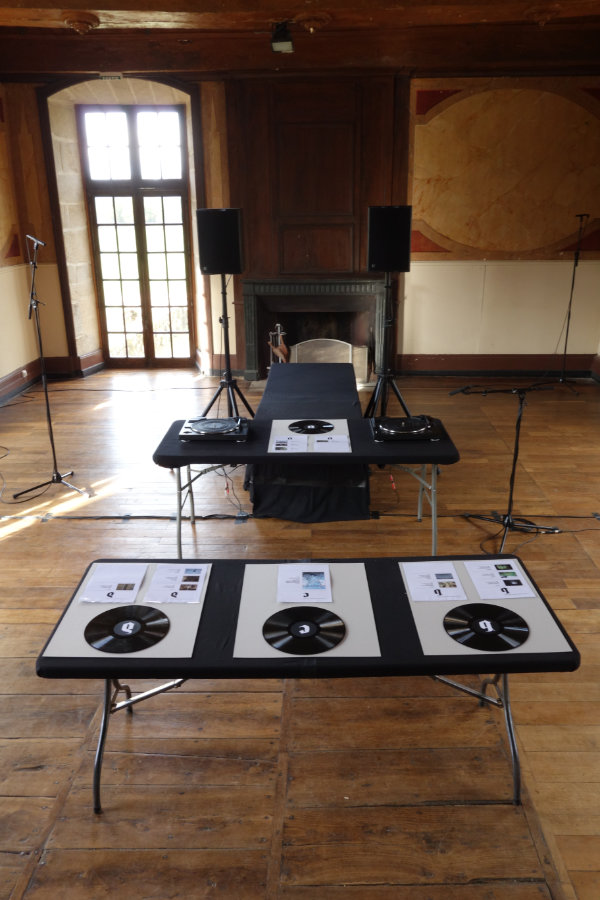
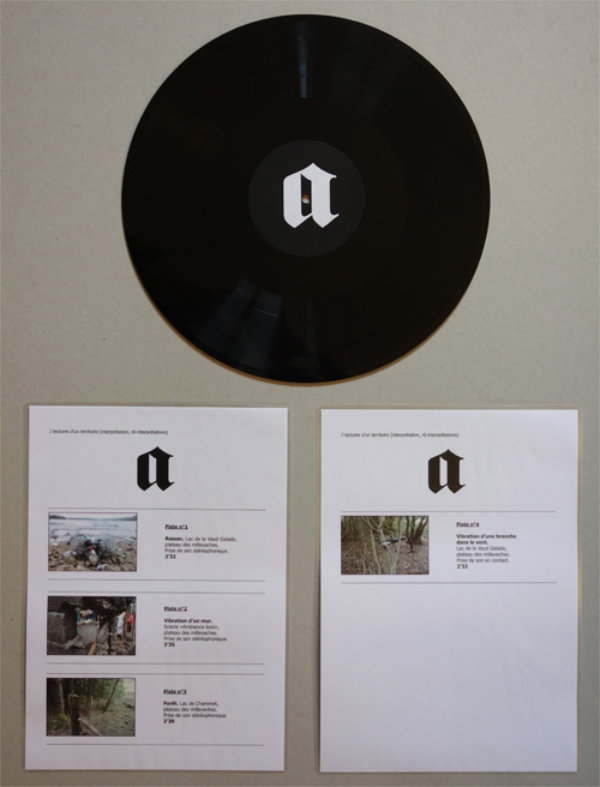
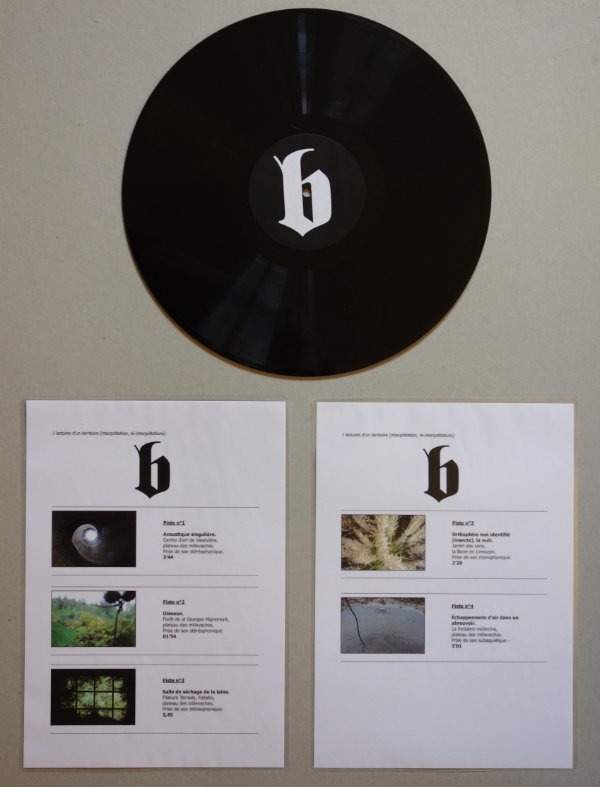
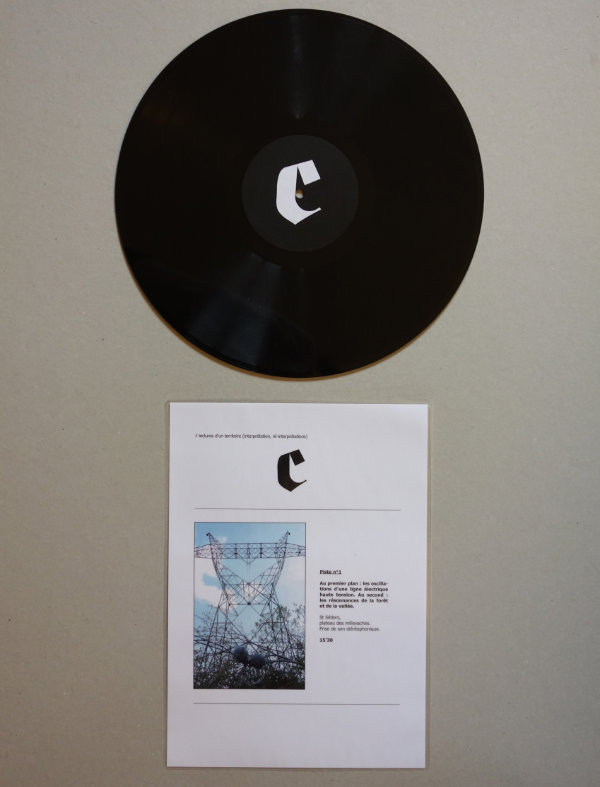
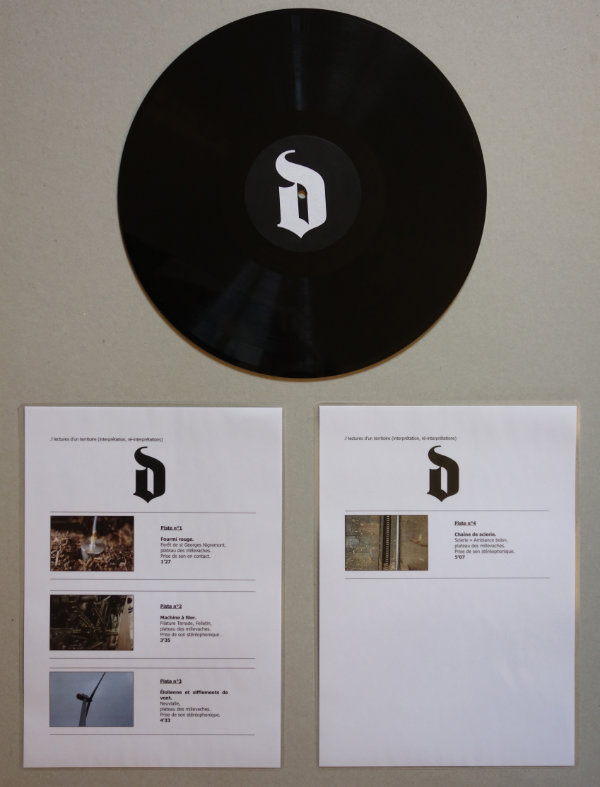
The second stage of the project consists of a public presentation of the recordings made during phase I. These will be freely accessible within the exhibition space. A series of vinyl records will be available for playback on a number of listening devices. A brief documentation will be provided for each record. The listening sessions are systematically recorded in the exhibition space itself: the sounds are thus reinterpreted, but this time by the audience. Playback faults, cracking grooves, pauses in playing and listeners' reactions are among the many ways in which the initial recordings can be distorted, bringing them to a new acoustic plane. Here, the act of listening along with the manipulation of the medium become means of sound transformation.
III. Concert/live presentation
The third and final step in the territory's interpretation: its ‘re-interpretation’, consists in presenting a piece composed from the recordings produced in phase II. This third episode definitively ties the project to the notion of music, by inviting the audience to a concert. This is a multiphonic piece, which is also featured in the exhibition space. It is the climax of the ‘mise en abîme’ of the phonographies, of this listening and recording loop.