Stones, air, axioms / Delme
Synagogue of Delme, France - 2015
avec Jean-Luc Guionnet
===
Fèn te ko ro, nka kow bè ro kolo ntè (Il n'y a rien dans les choses mais toutes les choses ne sont pas sans contenu.)
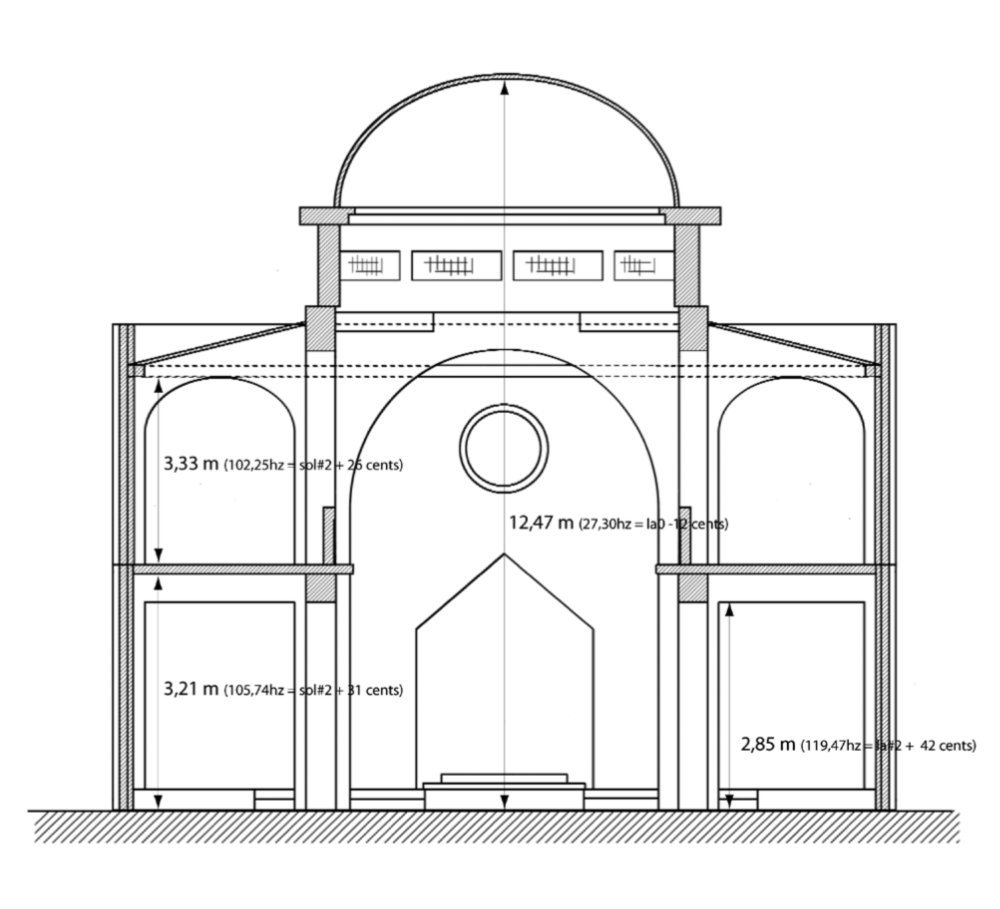
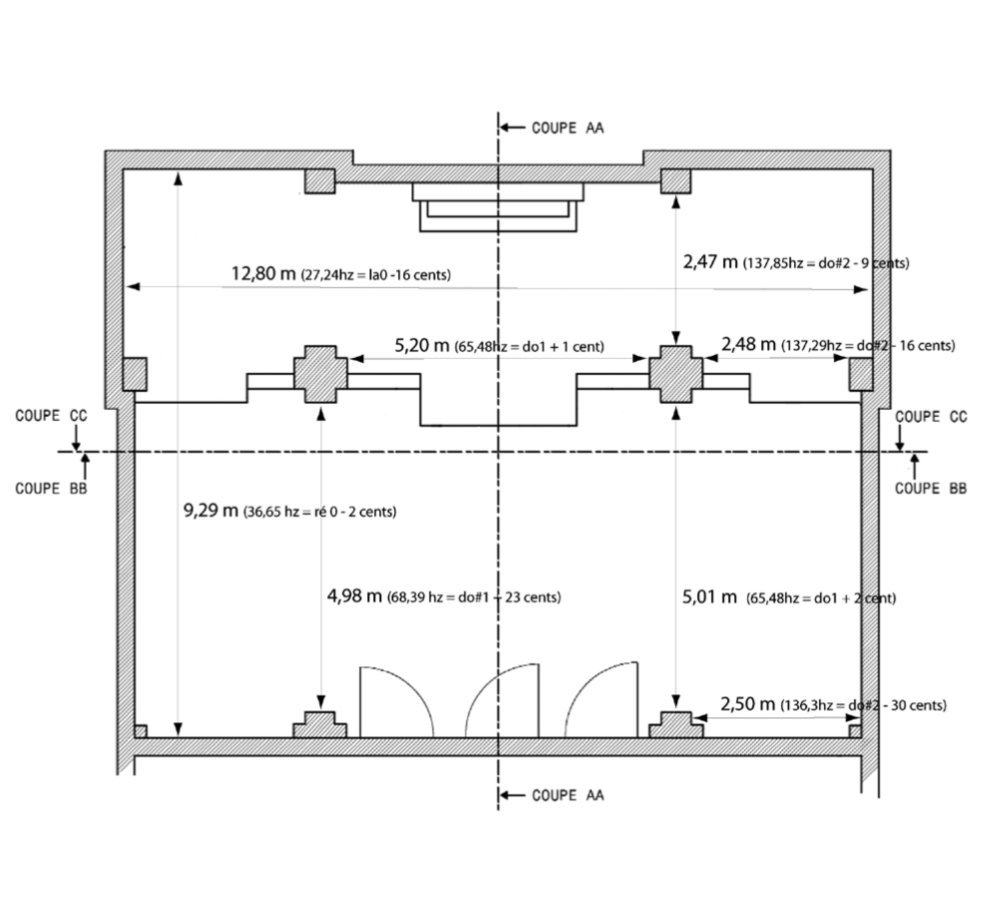
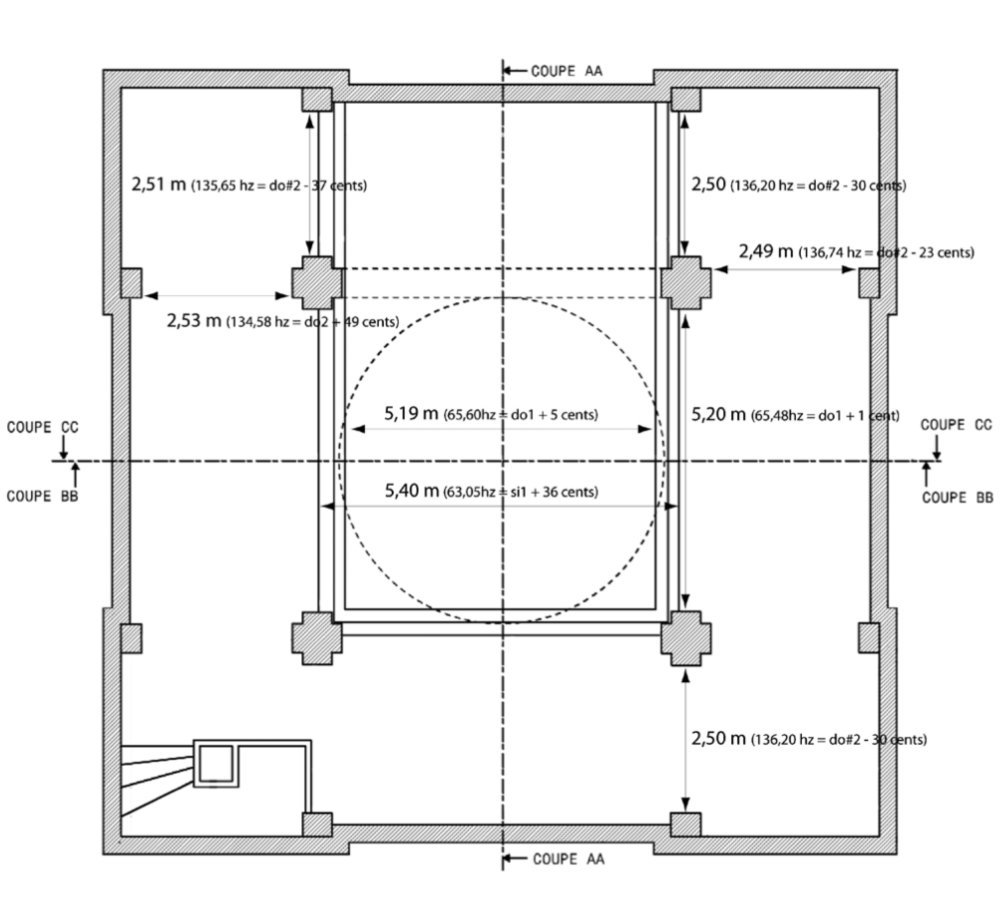
In 2006, at a time when they were both active in the field of experi-mental and improvised music, Jean-Luc Guionnet and Thomas Tilly came to know each other through their shared interest in relationships between sound and architecture. In 2010 they created the first stage of the project Stones, Air, Axioms at the Poitiers Cathedral using its organ (a Clicquot organ of exceptional quality) to make it resonate through the whole building. From the outset, they conceived of this sound installation as the first phase of a long-term research project more specifically linked to religious architecture. Following a second instalment at the Corpus Christi Basilica in Krakow, Delme is the third phase of their project. By virtue of its history and exceptional acoustics, Delme’s former synagogue is the ideal setting for a customised, on-site sound installation. Jean-Luc Guionnet and Thomas Tilly are deliberately leaving the place empty, giving visitors an experience of both visual and sound architecture. By supplementing the built space with frequencies, as well as voices, instrumental notes, rhythms and silences, the artists offer everyone a special listening situation: whether this listening is drifting or attentive, static or mobile, it is guaranteed to give visitors a different perception of the place, which is remoulded by the volume of air it contains and by the sound travelling through it. The “score” of Stones, Air, Axioms / Delme was composed partly from architectural drawings, whose principal measurements were translated into sounds and waves, and partly from recordings of voices and instruments, which spread through the space. The voices in question mix different languages, both familiar and foreign, comprehensible and incomprehensible. They are not just abstract sound materials, but also vehicles of a meaning that fades away in the succession of its echoes. From Dogon prayer translated from one language to another, to the personal account of a mystical experience, these voices combine to form an architecture of sounds and signs favourable to the decompartmentalisation of all the senses.
“With Stones, Air, Axioms / Delme, we take the synagogue with all of the history it carries, with the importance of its past function. Even if we have to force them in the very depths of this history, we stretch relations between voices, frequencies and time intervals. Speech is primarily taken for its aspect of testimony and radical singularity. The frequencies and intervals are taken for their ability to measure and redraw the architecture in a sound map. The testimony is connected with the sacred, the languages are disparate, and translations are also present. In choosing them, there is no exhaustiveness, little rationality.”
Understanding the site
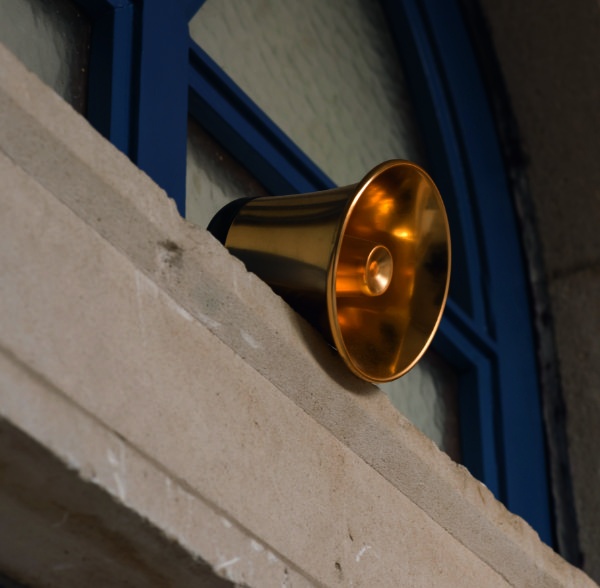
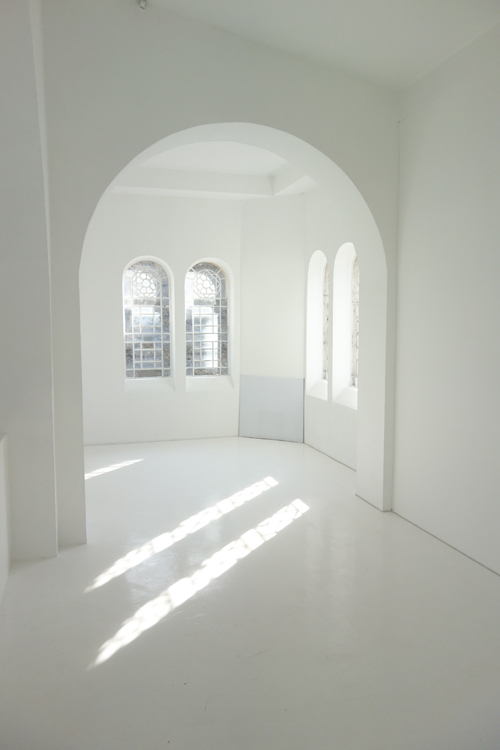
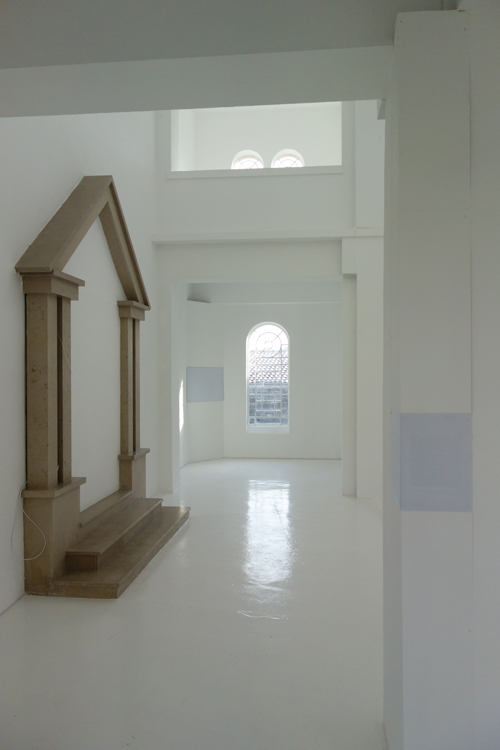
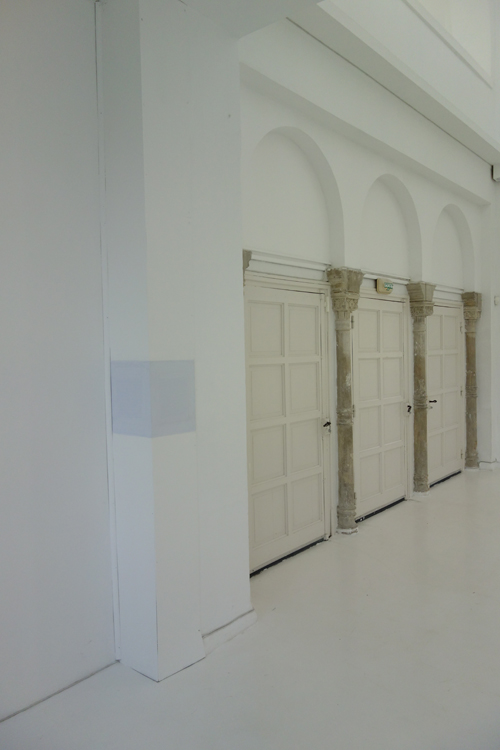
The site is empty, white, only the background noise from outside filters in. We decide to bring sound back in. There is the shape of the building and its two floors. As always in Stones, Air, Axioms, we take a series of metric measurements that will serve as a foundation for composition. There is the history the building carries. We will tackle it by integrating voice, without yet knowing how. The location of the speakers – We choose a type of sound distribution based on the space, the volume of air, the potential circulation directions. Twelve speakers will be merged into the whiteness of the place, inside, invisible. One last speaker will be placed outside, in full view, like a call to enter the space. The composition of the objects – The measurements taken are translated into frequencies, then into notes. – We record those notes played by instruments, as dryly and analytically as possible, far from the building, in the studio. We keep them as they were played, with all their perfections and imperfection. We also record sine waves corresponding to these same measurements. We decide to tackle the religious mysticism of the site by using a sacred text that has nothing to do with the place: a Dogon prayer of the dead. We will use a recorded version of this text in Sigi so (a secret language of Dogon mythology), as well as in French and Hebrew. This recording will also be created in the studio, once again as analytically as possible.
We compose a series of short pieces that we will call “objects”
These pieces, varying in duration, are made up of instrumental sounds, recorded voices, sine waves. Each piece is composed for either one or two speakers placed in the space.
The text
a funeral prayer. Introduction with Abiba, the chanting staff: "Hello everyone". "We’re sad today". “What’s going on ?” Someone died". "What are we going to do ? ” We’re going to get ready". “We have too much meat.” This meat isn’t for eating. “We’re getting ready.” "The women have arrived". "The men have arrived". "The women have calabashes in their hands". "The men have spears in their hands". "The men have guns in their hands". "The men are already playing their drums". "The body is to be carried to the attic, which will be its place of eternal rest".
The objects and the installed space
We place the objects in the sound system. They are played randomly and intercut by breaks of silence. From that point, we no longer have any control over the final mix, the triggering of the sounds, their behaviour in the building’s unique acoustics. We play two recordings on the speaker outside, two recordings testifying to personal and mystical experiences: the first is Marc, a friend of Jean-Luc, describing his visions; the second is "Principal sans diplômes", a Guersé traditional healer blessing Thomas in 2004.